


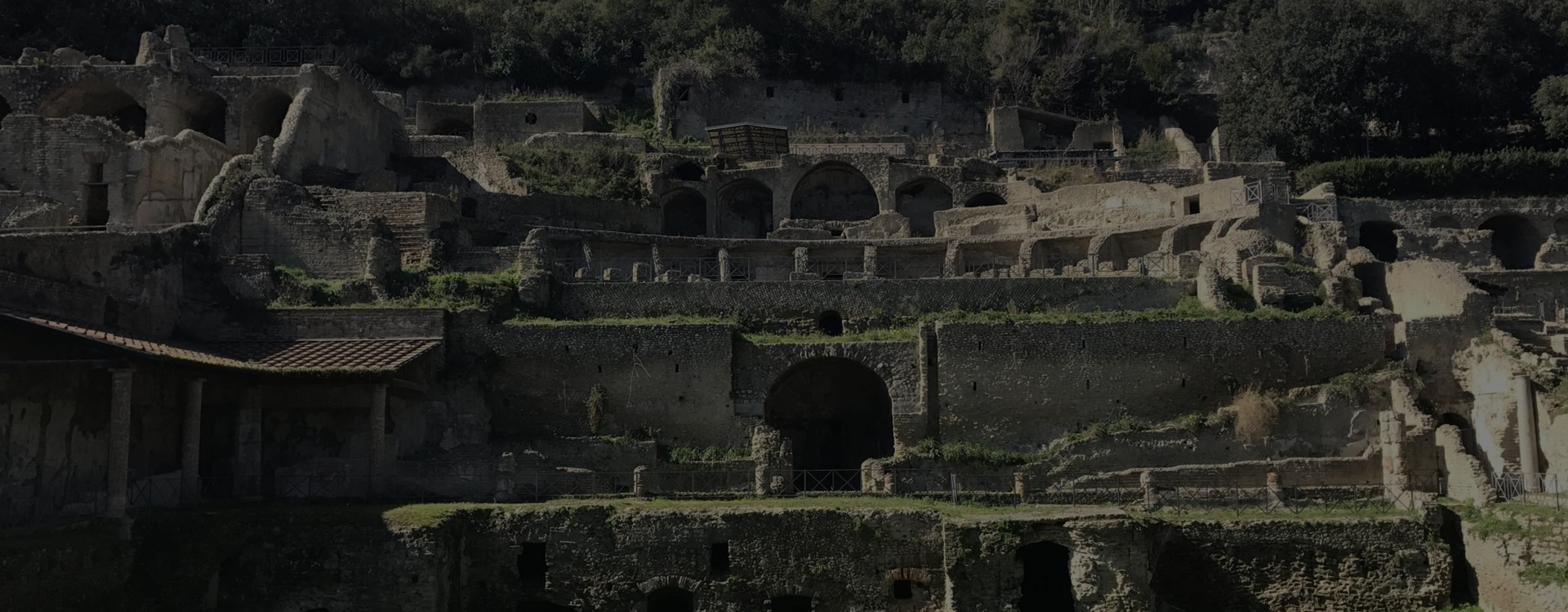
ARCHAEOLOGICAL BAIA THERMAE PARK TOUR
YOUR EXPERIENCE
What you will do
- A walk among the holm oaks of the hill overlooking the Bay of Baia
- Archaeological visit from the Villa of the Ambulatio to the Mercury Sector (the spa sectors)
- The pictorial schedule in the portico of Natatio
- The stuccos of the thermal rooms
- Mercury sector garden
- A tasty sfogliatella with a Neapolitan coffee
What you will visit during the Archeaological Baia Thermae Park Tour
Discover the beauty of a city full of charm by visiting the ancient monuments theater of loves that inspired Catullo, Properzio and Ovidio.
Discover why this volcanic area is called Campi Flegrei.
The Imperial Villa and Baths, the avant-garde Roman construction techniques, the stuccoes and frescoes of the rich imperial baths admired by Orazio and Cassiodoro, the first thermal domes and the charm of the great hall of the c.d. Temple of Mercury.
Entering Via Terme Romane, the different areas of the park will be covered, from the Villa of the Ambulatio to the Sector of Mercury, to the Terme di Venere through a drop of about 30 m; you will see the frescoes of the porticos of the Natatio, the stuccos of the thermal rooms, the garden of the mercury sector with the suggestive environment of the great dome.
*The tour price will be € 10 per person only if you reach a minimum of 15 participants. Alternatively you can choose to participate in the tour by following the prices shown below:
from 3 to 10 people: € 100
groups of 11 to 15 people: € 130
For groups and groups with more than 15 participants, the price will be € 10 per person.
Included services: Guide in your language
Not included services: Entrance tickets to the castle
Tickets for archaeological sites: € 4 adults
Minors free entry.
Useful information
- It is recommended to wear comfortable shoes
Languages: 


YOU CAN REQUEST AN ESTIMATE FOR PRIVATE TOURS
Fill out the form to book the Archeaological Baia Thermae Park Tour or contact us on WhatsApp: +44 (0) 7507 629016
The tours offered by Campania Visits and Tours are all carried out with the collaboration of official and certified tour guides.
An official and certified tour guide is a licensed professional (compulsory for the Italian law) who, for work, accompanies individuals or groups of tourists to visit museums, galleries, archaeological excavations, works of art and sites of tourist interest, of which illustrates the characteristics and landscape, artistic, historical and cultural attractions.
This professional figure should not be confused with that of the tour leader, who is instead limited to assisting and providing information to tourists, sometimes accompanying them even on the sites of interest, but without conducting the guided tours.
How to book
To finalize the booking of the tour or the requested service (eg Transfer ..), use the request form on the page of the service that you want to book.
A member of our staff will contact the person who made the booking to illustrate the payment methods for the chosen service.
Once the payment is received, we will send an email confirming the tour or service with the following information:
– Date of execution of the service;
– Name of the person who made the booking and number of participants;
– Tour itinerary and included services;
– Instructions to reach the meeting point with our guide;
– Emergency telephone number.
Campania Visits and Tours reserves the right to modify the itineraries and / or timetables due to major force (adverse weather conditions, rough seas, etc.).
Campania Visits and Tours is not responsible for any museum, archaeological sites closures and is not responsible for strikes, delays, irregularities in city traffic or any other type of damage caused by third parties or force majeure.
Campania Visits and Tours is not responsible for any changes in the input prices or increases in the cost of the services. In the event that such exceptional circumstances should prohibit the execution of the service, Campania Visits and Tours will reimburse the customer the full paid amount, but no other compensation will be due.
Campania Visits and Tours is not responsible for any loss or theft of objects owned by the guests during the tours. For payments by credit card there is a 3% surcharge on the cost of the tour (for American Express the supplement is 5%).
The payment for the requested service will be charged to the credit card indicated in the booking procedure 3 days before the start date of the same.
Once the deadline of 3 days before the starting date of the service expires, it must be paid also in case of non-execution.
In the event that the booking of the service should take place after the 3-day deadline, the payment will be immediate.
The customer can cancel his reservation completely free of charge no later than 3 days before the starting date of the service.
Cancellations received after this deadline will be subject to the payment of the cost of the service.
The cancellation of the reservation must be made through the following e-mail: info@campaniavisitsandtours.com, once the cancellation e-mail has been sent, in case of failure to receive confirmation of the cancellation of the service, contact Campania Visits and Tours.
-
Departure
Park entrance, via terme Romane
-
Departure Time
Please arrive at 09:30 for a quick departure at 10:30
-
Return Time
13:00
-
Dress Code
Casual. Comfortable clothes, sneakers, a hat and a jacket
From our gallery
Archeaological Baia Thermae Park Tour.


Villa dell’Ambulatio

Villa dell'Ambulatio
Terme di Venere

Terme di Venere
Affreschi dei portici della Natatio

Stucchi delle stanze termali

Stucchi Stanze Termali Parco Archeologico Baia
Giardino del settore di mercurio

Giardini Tempio Mercurio Baia
Location
Raggiungi la tua guida all'ingresso del Parco
Parco Archeologico delle Terme di Baia
Il primo complesso architettonico è denominato Villa dell’Ambulatio e si articola su sei terrazze. Quella più alta è occupata dal quartiere domestico, con peristilio, stanze di soggiorno e cubicula (stanze da letto) ai lati di una grande sala centrale aperta sul panorama. La seconda terrazza, che in origine fungeva da basamento di quella superiore, successivamente venne rafforzata e trasformata in un portico coperto (ambulatio).
Esso è diviso in senso longitudinale in due navate da una serie di pilastri raccordati con archi e presenta una grande sala centrale in corrispondenza di quella superiore. I livelli inferiori di questo edificio subirono varie modifiche nel corso del tempo, che hanno alterato la destinazione originaria degli spazi. L’intero complesso originariamente presentava pavimenti in marmo o a mosaico bianco e nero. Il nucleo denominato della Sosandra occupa la parte centrale dell’intera area indagata. La struttura si articola su quattro livelli: la parte destinata a residenza si sviluppa sui due livelli superiori, il più alto dei quali è occupato da ambienti di servizio, quello sottostante da triclini, sale da giorno ed un piccolo laconicum (locale per saune) decorato a stucco, che affacciavano sul golfo, preceduti da un portico a colonne, ed erano decorati con raffinati pavimenti a mosaico.
Dalla sala più grande di questo settore proviene la statua in marmo della c.d. Aspasia, nota come Afrodite Sosandra (copia romana di un originale greco), che da il nome al complesso. I due livelli inferiori dell’edificio si articolano con un effetto scenografico e sono costituiti superiormente da un emiciclo ed inferiormente da un’area scoperta. La restante parte è infine occupata da edifici termali frequentati fino ad epoca medioevale. Il settore cosiddetto di Mercurio, prende il nome, da una natatio termale a pianta circolare con volta a cupola, chiamato ”Tempio di Mercurio“ dai primi viaggiatori ed è composto da due nuclei edilizi, il primo dei quali è in realtà poco conosciuto poiché gli ambienti sono interrati e sommersi fino all’imposta della volta o sono stati distrutti da costruzioni moderne. Da uno di questi locali proviene la testa di Apollo dell’Omphalos, copia romana in marmo di un originale greco in bronzo. Il nucleo meridionale di questo quartiere, realizzato in età Severiana, è composto da sale fastose sia per opera architettonica che per apparati decorativi. Probabilmente tutti questi edifici facevano parte del Palatium di Alessandro Severo, che forse si estendeva fino al mare.