


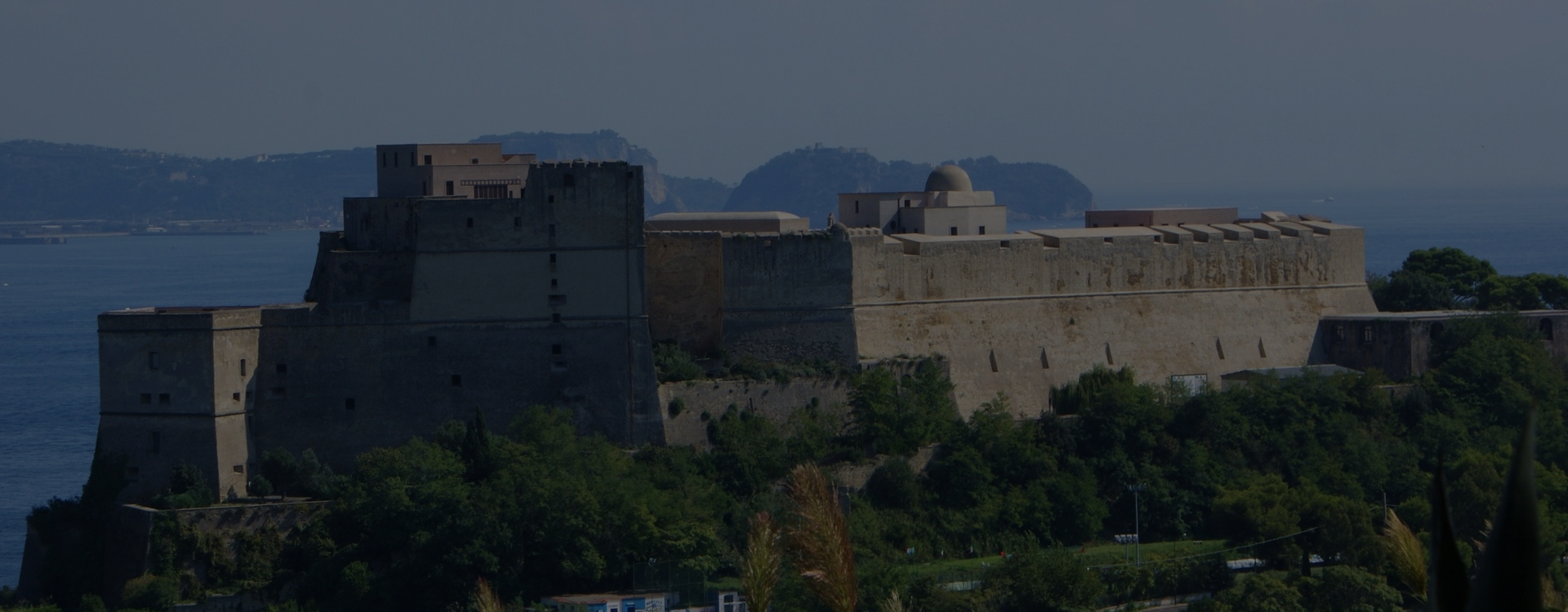
PHLEGRAEAN FIELDS MUSEUM: ARAGONESE CASTLE OF BAIA TOUR
YOUR EXPERIENCE
What you will do
- Military castle
- Phlegraean Fields Museum
What you will visit during the Phlegraean Fields Museum: Aragonese Castle of Baia Tour
A suggestive visit to a monumental military castle, a strategic outpost of the Aragonese army that today houses the wonderful archaeological finds coming from the Phlegraean sites of the Rione Terra of the Ancient Puteoli, Baiae, Cuma and Villa Liternum.
The tour will start from the rooms dedicated to the city of Puteoli, the small Delo; you will admire the monumental urban remains of the ancient necropolis, passing through the attestations of the rich trades that made Puteoli the most important port of Rome for 500 years.
The second floor is dedicated to Cuma, from an optic settlement to a Roman city, passing through the beautiful finds of the Greek-Samnite phase.
On the top floor you can visit the plastic finds dicovered during the restoration of the Rione Terra in Pozzuoli, the sculptures of the Augustan age with the proposal exhibition of the romanist archaeologist Fausto Zevi and the splendid head of the Atena Lemnia, a Roman copy from an original Greek attributed to Fidia.
The castle offers a splendid view of the gulf from the parade ground, where it is possible to visit the Aragonese church dedicated to the Madonna del Pilar.
The Tenaglia Tower, with the reconstructions of the Sacellum of the Augustales and of the exciting Nymphaeum of Claudius, found in the waters of the Bay, is currently closed.
*The tour price will be € 10 per person only if you reach a minimum of 15 participants. Alternatively you can choose to take the tour following the prices shown below
from 3 to 10 people: 100 €
grops dìform 11 to 15 people: 130 €
For groups with more than 15 participants, the price will be € 10 per person
Included services: Guide in your language
Not included services: Entrance tickets to the castle
Tickets for archaeological sites 4 € adults
minors free entry.
Skip the line service
Useful information
- Please arrive at the meeting place at least 15 minutes before the start of the tour
- Comfortable shoes are recommended
Linguages: 


YOU CAN REQUEST AN ESTIMATE FOR PRIVATE TOURS
Fill out the form to book the Phlegraean Fields Museum: Aragonese Castle of Baia Tour or contact us on WhatsApp: +44 (0) 7507 629016
The tours offered by Campania Visits and Tours are all carried out with the collaboration of official and certified tour guides.
An official and certified tour guide is a licensed professional (compulsory for the Italian law) who, for work, accompanies individuals or groups of tourists to visit museums, galleries, archaeological excavations, works of art and sites of tourist interest, of which illustrates the characteristics and landscape, artistic, historical and cultural attractions.
This professional figure should not be confused with that of the tour leader, who is instead limited to assisting and providing information to tourists, sometimes accompanying them even on the sites of interest, but without conducting the guided tours.
How to book
To finalize the booking of the tour or the requested service (eg Transfer ..), use the request form on the page of the service that you want to book.
A member of our staff will contact the person who made the booking to illustrate the payment methods for the chosen service.
Once the payment is received, we will send an email confirming the tour or service with the following information:
– Date of execution of the service;
– Name of the person who made the booking and number of participants;
– Tour itinerary and included services;
– Instructions to reach the meeting point with our guide;
– Emergency telephone number.
Campania Visits and Tours reserves the right to modify the itineraries and / or timetables due to major force (adverse weather conditions, rough seas, etc.).
Campania Visits and Tours is not responsible for any museum, archaeological sites closures and is not responsible for strikes, delays, irregularities in city traffic or any other type of damage caused by third parties or force majeure.
Campania Visits and Tours is not responsible for any changes in the input prices or increases in the cost of the services. In the event that such exceptional circumstances should prohibit the execution of the service, Campania Visits and Tours will reimburse the customer the full paid amount, but no other compensation will be due.
Campania Visits and Tours is not responsible for any loss or theft of objects owned by the guests during the tours. For payments by credit card there is a 3% surcharge on the cost of the tour (for American Express the supplement is 5%).
The payment for the requested service will be charged to the credit card indicated in the booking procedure 3 days before the start date of the same.
Once the deadline of 3 days before the starting date of the service expires, it must be paid also in case of non-execution.
In the event that the booking of the service should take place after the 3-day deadline, the payment will be immediate.
The customer can cancel his reservation completely free of charge no later than 3 days before the starting date of the service.
Cancellations received after this deadline will be subject to the payment of the cost of the service.
The cancellation of the reservation must be made through the following e-mail: info@campaniavisitsandtours.com, once the cancellation e-mail has been sent, in case of failure to receive confirmation of the cancellation of the service, contact Campania Visits and Tours.
-
Departure
Baia Belvedere in Via castello, before the ramp to go up to the museum
-
Departure Time
Please arrive at 09:30 for a quick departure at 10:00
-
Return Time
13:00
-
Dress Code
Comfortable shoes are recommended
From our gallery
Phlegraean Fields Museum: Aragonese Castle of Baia Tour


Castello Aragonese di Baia

Castello Aragonese di Baia
Location
Reach your guide at the Baia viewpoint, before the ramp to go up to the museum
Castello Aragonese di Baia
In epoca romana la collina era occupata da un complesso residenziale, forse la "villa di Cesare" (Tacito afferma che la villa di Cesare si trovava su di un'altura dominante il golfo di Baia), i cui resti furono distrutti e talora inglobati nell'attuale fortezza. Strutture superstiti della villa sono visibili intorno ad essa lungo la costa e a terra presso il campo sportivo, mentre altre sono state individuate recentemente e messe in luce nel corso dei lavori di restauro delle parti più alte del castello (torre Cavaliere) e più in basso lungo le sue scarpate a mare, a seguito del loro diserbo.